
Most people treat accessories as an afterthought. You pick the outfit, then grab whatever is nearby. But the role of accessories in outfits is much more deliberate than that. Accessories contribute up to 30% of a look’s total visual impact. That means nearly a third of what people notice about your style has nothing to do with your clothing. It has everything to do with the belt, the bag, the earrings, and the scarf you chose or did not choose. Once you understand that, styling starts to feel less like guesswork and more like a real skill.
Table of Contents
- Key takeaways
- The role of accessories in outfits: why they matter more than you think
- Styling principles that actually work
- Accessories for every occasion
- Building a versatile accessory wardrobe
- My honest take on accessories and why most people get them wrong
- Upgrade your look with Netzbay
- FAQ
Key takeaways
| Point | Details |
|---|---|
| Accessories shape a look’s tone | The right pieces shift an outfit from casual to polished without changing a single clothing item. |
| One focal point works best | Choose one statement piece and let everything else play a supporting role to avoid visual overload. |
| Coordination beats exact matching | Shared undertones and materials create a more polished look than matching shoes to bag color exactly. |
| Occasion determines accessory style | Business settings call for refined pieces, while casual and formal settings each have their own rules. |
| Staple pieces create flexibility | A few quality, neutral accessories can stretch across dozens of outfits and multiple occasions. |
The role of accessories in outfits: why they matter more than you think
Accessories do not just finish an outfit. They define it. Accessories serve as finishing touches that control the tone of a look rather than simply decorating it. That is a meaningful distinction. Think about a white button-down shirt and dark jeans. With white sneakers and small gold hoops, it reads relaxed and weekend-ready. Add a structured leather tote, a slim watch, and heeled mules, and that exact same outfit becomes work-appropriate. The clothes did not change. The accessories did all the work.
This is what makes accessories such a powerful part of personal style. They act as a visual language. The pieces you choose communicate things about your mood, your taste, and your intention before you say a word. A chunky silver cuff says something different than a delicate chain bracelet. A bold printed scarf tells a different story than a plain one. That communication is what the importance of accessories is really about.
Here is what accessories control when you wear them thoughtfully:
- Focal points. A statement necklace or oversized earrings draw the eye and anchor the look.
- Mood and tone. Minimalist pieces feel clean and modern. Layered, textured pieces feel expressive and bold.
- Proportion and balance. A wide belt cinches the waist and reshapes a silhouette. Long earrings elongate the neck.
- Context shift. The same outfit reads differently depending on the accessories you pair with it, making them the key tool for accessorizing for different occasions.
Pro Tip: Try building three different accessory combinations for one outfit you already own. You will quickly see how much the accessories control the entire feeling of the look.
Styling principles that actually work
Getting the impact of accessories on style right comes down to a few clear principles. The most reliable one is the rule of one focal piece. A single standout accessory should anchor your look, supported by calmer, quieter pieces. This prevents visual crowding and keeps your style intentional rather than overwhelming.
Here is how to apply that principle in practice:
- Choose your focal piece first. Decide whether the statement is a bold earring, a printed bag, a wide belt, or a layered necklace. Everything else follows.
- Let supporting pieces be subtle. If you choose large earrings, skip the statement necklace. A simple chain or nothing at all lets the earrings breathe.
- Match formality to the occasion. A crystal-embellished clutch fits a wedding. It does not fit a Monday morning meeting.
- Balance loud with quiet. Loud accessories require subtle supporting pieces. This balance stops your look from feeling chaotic.
- Coordinate, do not copy. You do not need to match your bag to your shoes exactly. In fact, exact matchy-matchy styling is largely considered outdated outside of formal black-tie settings.
The comparison below shows the difference between common accessory mistakes and what actually works:
| What to avoid | What works instead |
|---|---|
| Matching bag and shoes in identical color | Coordinate with shared undertones or materials |
| Stacking multiple statement pieces at once | One bold focal piece, two to three subtle accents |
| Wearing accessories that clash in formality | Match accessory formality to the occasion and outfit |
| Competing patterns across accessories | Limit patterns to one piece per look |
Pro Tip: When you are unsure if you have too much going on, take one piece off before you leave. Most of the time, that final edit makes the look stronger.
Accessories for every occasion
Knowing how to style accessories matters a lot less if you do not know which accessories belong where. Different settings call for completely different approaches, and this is where many people get tripped up.
For professional and business settings, less is almost always more. Refined jewelry like stud earrings, a classic wristwatch, and a structured handbag send the right signals in a work environment. Flashy, oversized, or highly decorative pieces distract rather than impress. Structured handbags and minimal jewelry create a sense of order and polish that aligns with professional expectations. This is a big part of why accessories elevate work outfits in ways that clothing alone cannot.
For casual everyday wear, you have the most creative freedom. This is where layering, mixing metals, and experimenting with color pay off. Consider these approaches:
- Layer two or three delicate necklaces at different lengths for dimension.
- Mix gold and silver tones intentionally, not accidentally.
- Use a bold printed scarf as a hair tie, a belt, or a bag accent.
- Choose a brightly colored crossbody bag to inject energy into a neutral outfit.
- Try statement accessories with casual looks like an oversized cuff with jeans and a simple tee.
For formal events, restraint and elegance carry the day. Think slim clutches, pearl or crystal earrings, and delicate chains. The accessories should complement your outfit, not compete with it. A well-chosen pair of heels also functions as a key accessory in formal settings, shaping posture and adding height that changes the overall visual line of a look. You can explore shoes that complement your formal and professional outfits to round out the look.
The types of fashion accessories you need do not have to be expensive or plentiful. What matters is that they are chosen with purpose and matched to their context.
Building a versatile accessory wardrobe
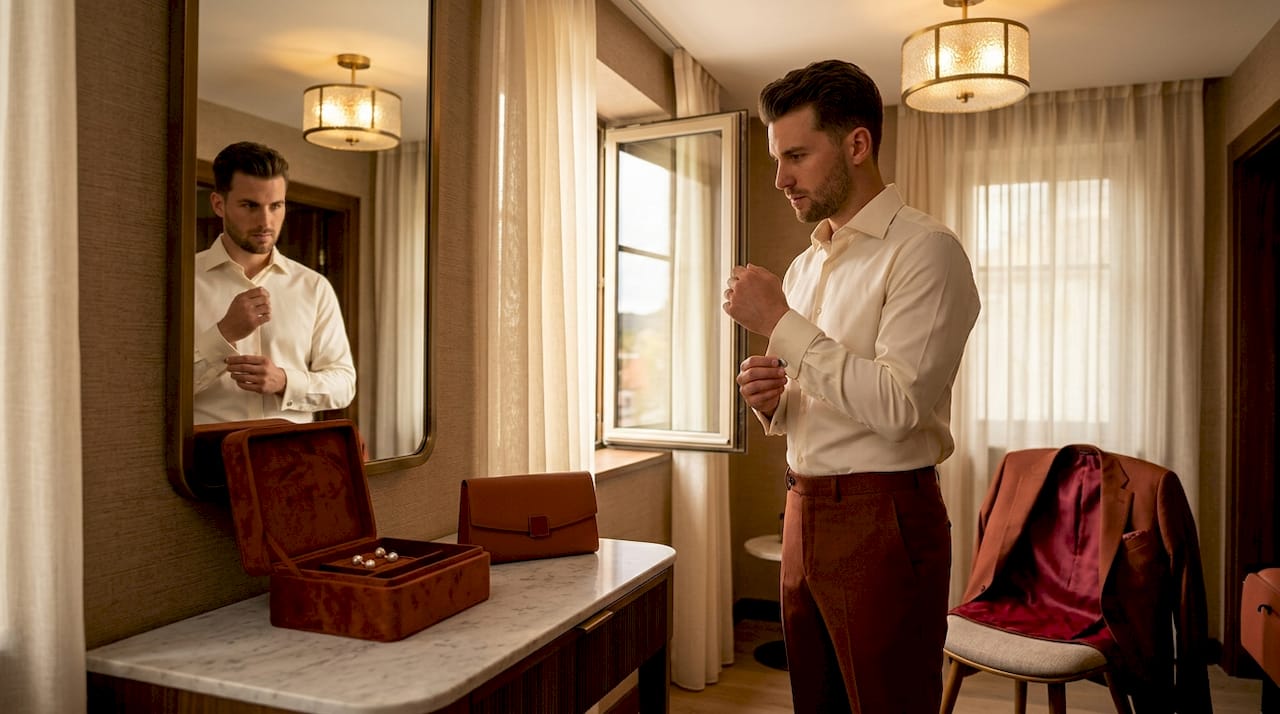
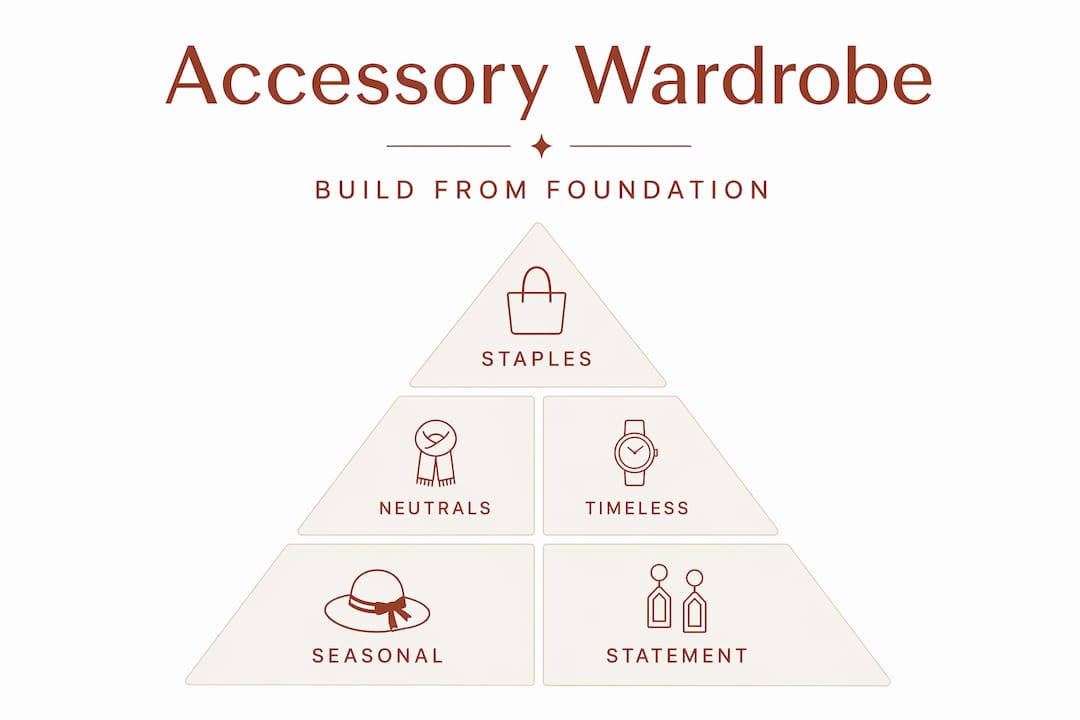
You do not need dozens of accessories to have options. You need the right ones. A small collection of well-chosen staples gives you flexibility across seasons, occasions, and outfit changes without constantly buying new pieces.
Start with these foundations:
- A neutral handbag. A tan, black, or cream structured bag works across almost any outfit. This single piece can shift from casual to professional depending on how you style it around it.
- Classic hoop or stud earrings. Gold or silver, medium-sized hoops suit most face shapes and can be worn anywhere. Studs offer a more refined, minimal look.
- A leather belt. Classic leather belts define the waist and add structure to outfits that might otherwise look shapeless. This is one of the most overlooked essential outfit accessories.
- A simple watch. Even a modest watch adds polish instantly and works in casual and professional contexts alike.
- A versatile scarf. Silk or lightweight cotton scarves can be worn around the neck, tied to a bag, used as a headband, or tucked into a blazer pocket.
Once you have your staples, you can add personality through layering and mixing with bolder, more seasonal pieces. A statement necklace, a patterned tote, or a pair of colorful earrings can refresh your entire wardrobe without requiring new clothing. The goal is to build a collection where each piece works alone and also plays well with others.
Investing in a smaller number of quality pieces beats accumulating a large number of cheap ones that fall apart or lose their shape quickly. You can find curated accessory collections that balance quality with affordability, so you do not have to choose between the two.
My honest take on accessories and why most people get them wrong
I’ve spent years thinking about how style actually works, and the thing I keep coming back to is this: most people underestimate accessories because they see them as decoration rather than communication. When I watch someone walk into a room, the accessories tell me more about their personal style than their clothing does. Clothing is often practical. Accessories are almost always intentional.
What I’ve learned is that the challenge is not finding the right accessories. It’s learning to edit. Most style missteps I see come from wearing too much rather than too little. People add more to fix a look that actually needs something removed. The rule about one focal piece is not just a styling trick. It reflects something real about how the eye processes a look.
I’ve also found real joy in discovering signature combinations. A particular gold cuff with a specific neutral palette. A certain scarf folded just so. These small details create a consistency that people recognize as personal style. You do not need a new wardrobe for that. You need a few pieces you truly love and a clear sense of how they work together. That is the real impact of accessories on style: not the individual pieces, but how intentionally you use them.
— Netzbay
Upgrade your look with Netzbay
Ready to put these principles into practice? Netzbay makes it simple to build a stylish, versatile accessory wardrobe without stretching your budget. The curated collections are selected with real wearability in mind, so every piece you find is both trendy and practical.
Whether you are looking for everyday staples or statement pieces for a special occasion, Netzbay has options at prices that genuinely surprise shoppers. With trusted customer reviews, secure shopping, and new arrivals updated regularly, you can shop with confidence. Check out the styling services to get personalized guidance on building your accessory wardrobe, or browse the current specials for seasonal deals on accessories that work across every outfit in your closet. Style that fits your life and your budget is closer than you think.
Curious about 2026 pricing trends and how to shop smarter for fashion accessories this year? Knowing when and where to buy makes a real difference in building a quality collection affordably.
FAQ
What is the role of accessories in outfits?
Accessories control the tone, mood, and visual balance of any outfit. They can shift a look from casual to professional or from understated to bold without changing any clothing at all.
How many accessories should you wear at once?
Stick to one statement or focal piece, then add two to three subtle supporting accessories. Going beyond that risks visual overload and style confusion.
Why do accessories elevate work outfits specifically?
In professional settings, refined accessories like a structured handbag, stud earrings, or a classic watch signal polish and order. They complete the look in a way that plain clothing alone rarely achieves.
Should you match your bag and shoes exactly?
Not necessarily. Modern coordination based on shared undertones or complementary textures looks more polished than exact color matching, which can appear costume-like outside of formal black-tie events.
What are the most versatile accessories to own?
A neutral handbag, a leather belt, classic hoop or stud earrings, a simple watch, and a lightweight scarf cover the widest range of outfits and occasions with the fewest pieces.
Leave a Reply